
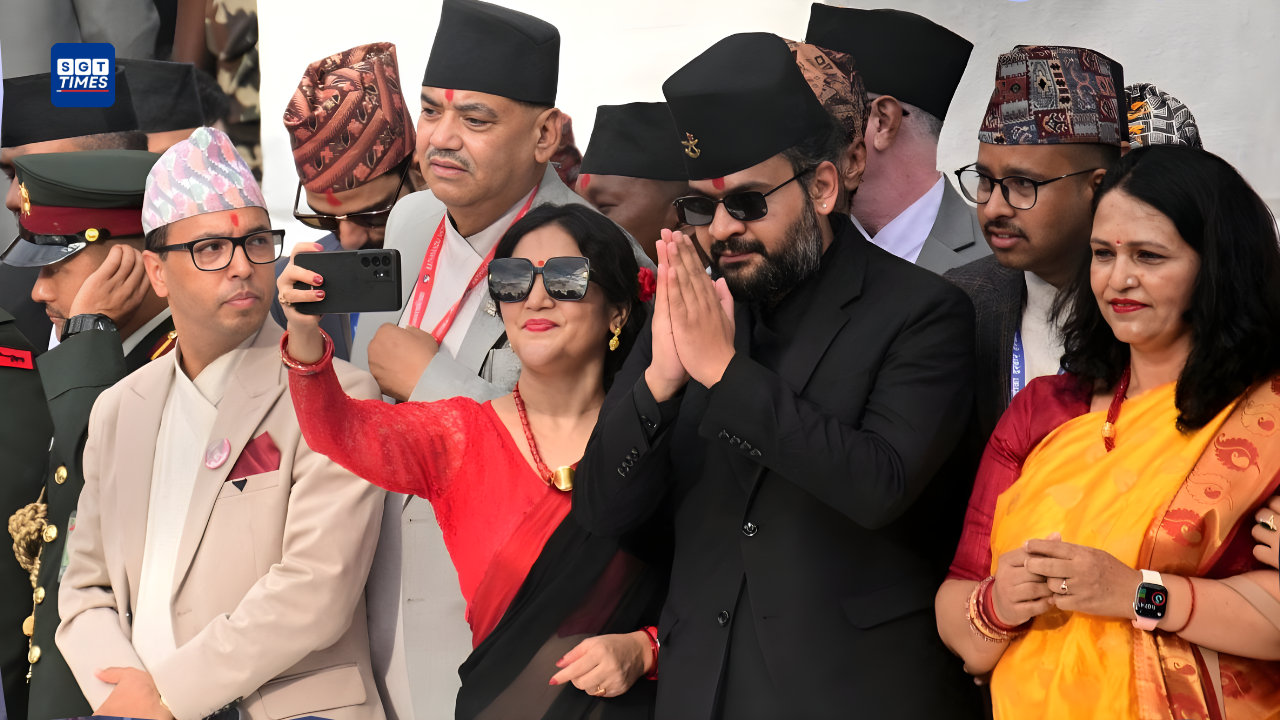
Rapper Balen Shah Poised to Become Nepal’s Youngest Prime Minister
Rapper-turned-politician Balen Shah is poised to become Nepal’s next Prime Minister after his party achieved a stunning victory in the country’s parliamentary elections. The 35-year-old has emerged as a significant political leader, transforming Nepal’s political landscape with an impressive electoral performance.
Balendra Shah, commonly known as “Balen,” won the Jhapa-5 parliamentary constituency with a record-breaking 68,348 votes—the highest number ever recorded in Nepal’s election history. In a surprising upset, he defeated veteran politician Khadga Prasad Sharma Oli, a four-time former Prime Minister and chairman of the Communist Party of Nepal (Unified Marxist-Leninist). Oli, who had long dominated the constituency, received just 18,734 votes, marking a dramatic political shift.
Until recently, Balen served as Kathmandu’s mayor, where he gained popularity for his anti-corruption stance and efforts to modernize urban governance. His transition from music to politics has attracted significant attention, particularly from younger voters who see him as a symbol of change and new leadership.
Balen leads the Rastriya Swatantra Party (RSP), a centrist political party that has quickly garnered support across Nepal. In the most recent election, the party won over 120 of the 165 directly elected seats in the House of Representatives, securing a clear majority through direct voting. This substantial victory has effectively disrupted Nepal’s traditional political order, which older, established parties have long dominated.
Nepal’s parliamentary elections utilize a mixed electoral system. Sixty percent of parliamentary seats are filled through direct elections, while the remaining 40 percent are allocated via a proportional representation (PR) system based on the overall vote share of political parties. The final distribution of seats through the PR system will determine the complete composition of the parliament, but Balen’s party already holds a commanding lead.
If he formally assumes office as Prime Minister, Balen Shah will become the youngest Prime Minister in Nepal’s parliamentary history. His potential leadership also reflects a generational shift in the country’s politics.
More than 40 percent of Nepal’s population, which is nearly 30 million, is under the age of 35. However, the leadership of many major political parties has traditionally remained in the hands of politicians in their seventies. This growing disconnect between young voters and older leaders has led to increasing frustration over the years, creating the conditions for a political breakthrough.
Balen’s victory, therefore, symbolizes not just a political upset but also a broader demand for new leadership and reforms. Many analysts believe his rise marks a turning point in Nepal’s democracy, with younger voters playing a decisive role in shaping the country’s future political direction.

