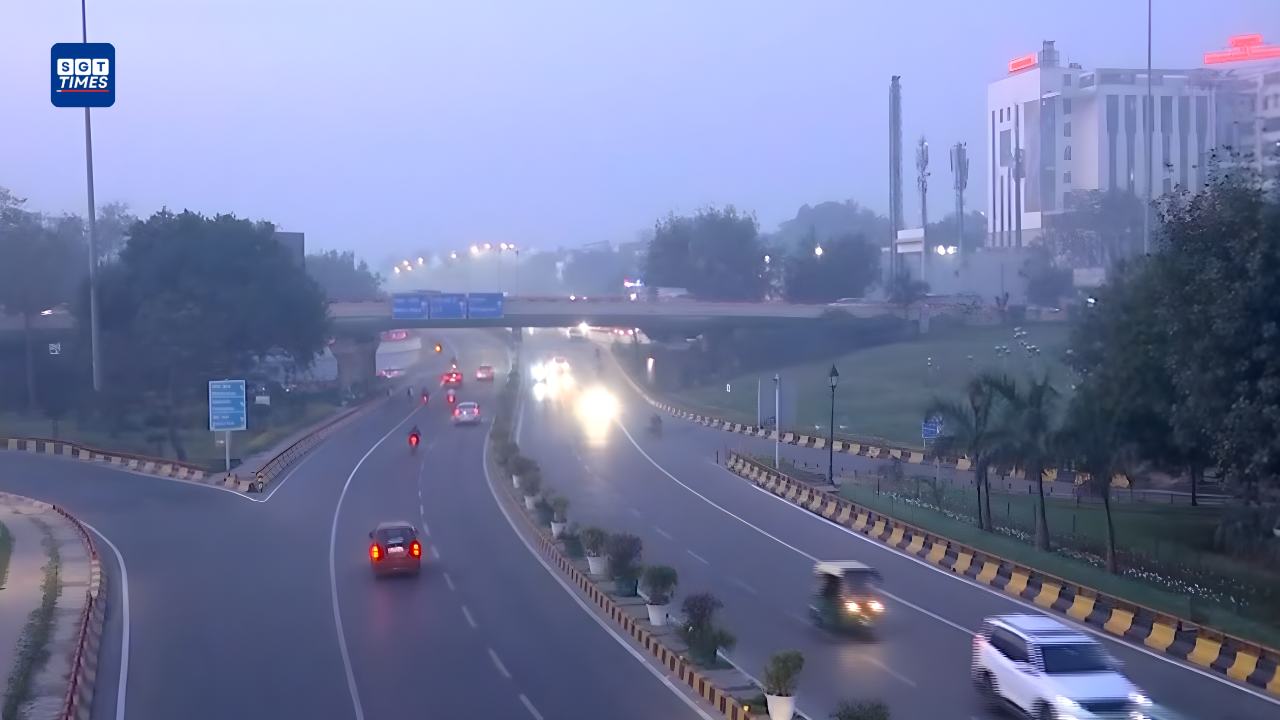
Delhi Air Quality Slips to ‘Moderate’ as Several Areas Record ‘Poor’ AQI
The air quality in the national capital Delhi witnessed a slight deterioration on Saturday, with the overall Air Quality Index (AQI) recorded at 197 at 8:30 a.m., placing it in the ‘moderate’ category as per data released by the Central Pollution Control Board (CPCB). While the city’s average AQI remained within moderate levels, several pollution hotspots continued to report poorer air quality conditions.
Among the worst-affected areas, Anand Vihar recorded a ‘poor’ AQI of 265, followed by RK Puram at 247. In comparison, IGI Airport Terminal 3 reported a relatively better AQI of 176, still within the ‘moderate’ category. According to AQI classification standards, a reading between 0 and 50 is considered ‘good’, 51–100 ‘satisfactory’, 101–200 ‘moderate’, 201–300 ‘poor’, 301–400 ‘very poor’, and 401–500 ‘severe’.
Data from previous days highlighted fluctuating air quality levels across different parts of the city. On Friday, areas such as Mundka, Shadipur, Nehru Nagar, Rohini, Bawana, and Jahangirpuri recorded AQI levels in the ‘poor’ category, while locations including Pusa, Lodhi Road, and Sri Aurobindo Marg showed comparatively better air quality readings. Similar trends were observed earlier in the week, reflecting uneven pollution levels across Delhi’s monitoring stations.
Environmental experts note that changing weather patterns, vehicular emissions, construction dust, and localised pollution sources continue to influence AQI readings across Delhi-NCR. Variations in wind speed and atmospheric conditions often result in sharp differences between monitoring locations, leading to pockets of higher pollution despite moderate city-wide averages.
The decline in air quality has also triggered political debate. The Aam Aadmi Party questioned the credibility of pollution data and raised concerns over the installation of new AQI monitoring stations in greener parts of the city, alleging that such decisions could affect overall readings. The criticism was directed at the Bharatiya Janata Party-led administration, which has maintained that monitoring expansions are intended to improve data coverage and transparency.
With air quality continuing to fluctuate between moderate and poor categories, authorities are expected to closely monitor conditions, especially as changing weather patterns may influence pollution levels in the coming days. Citizens, particularly children, elderly individuals, and those with respiratory issues, are advised to take necessary precautions during periods of reduced air quality.