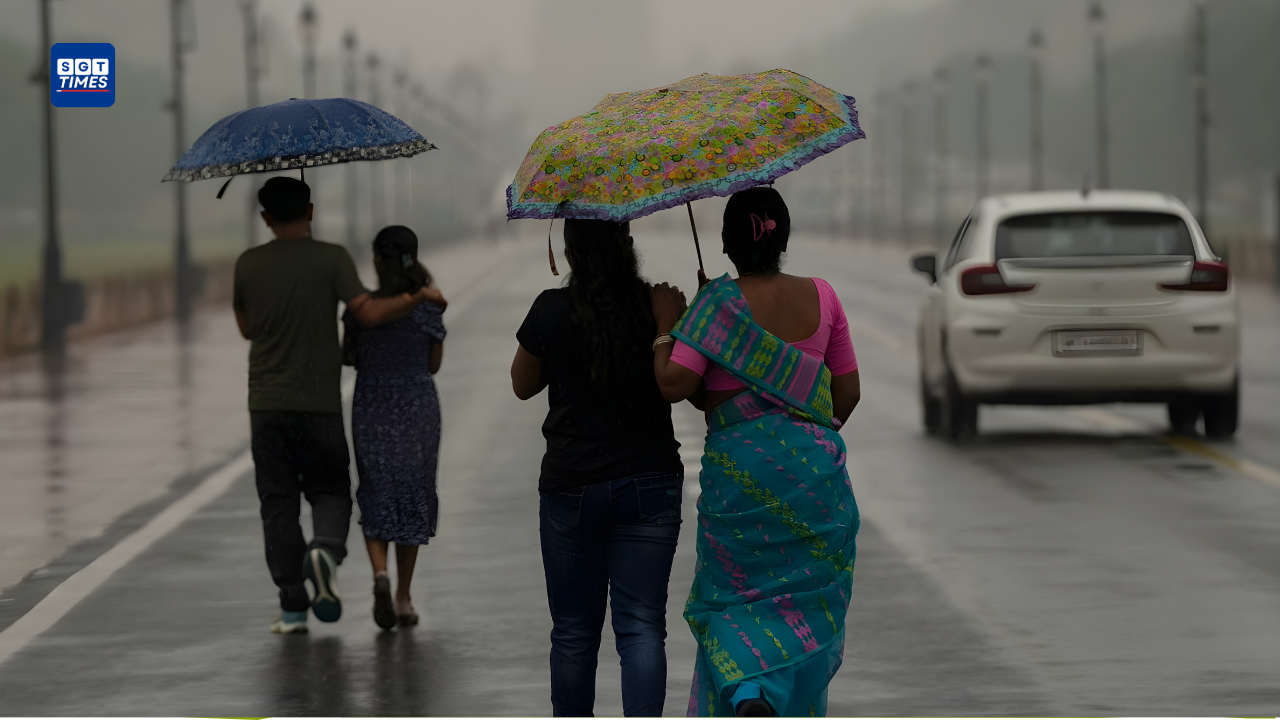
IMD Issues Orange Alert For Delhi-NCR Rainfall
The India Meteorological Department (IMD) has issued an orange alert for the Delhi-NCR region following heavy rainfall, thunderstorms, and strong winds. This weather event has provided temporary relief from the intense heat but has also disrupted normal life.
On Monday, several parts of the National Capital Region experienced severe weather, including heavy rain, lightning, and gusty winds. Wind speeds were recorded between 50 and 70 km/h, with some areas experiencing even stronger gusts, leading to reduced visibility and travel disruptions. On major routes like the Delhi-Jaipur Expressway, visibility dropped to below 500 meters due to dust storms and high winds.
Previously, the IMD had issued yellow alerts across various parts of India, warning of light rainfall and thunderstorms. However, due to worsening conditions, the alert was upgraded to orange, indicating more severe weather patterns. This alert is expected to remain in effect until the evening, urging residents to exercise caution.
Regions in Haryana, Uttar Pradesh, and Rajasthan are also anticipated to experience dust storms followed by light rain and thunderstorms. In Haryana, areas such as Gurugram, Rewari, Nuh, Mahendragarh, and Palwal are likely to face strong winds, lightning, and light showers, which may disrupt daily activities.
The weather department forecasts generally cloudy skies for Delhi on March 31, with a chance of drizzle in the afternoon or evening. Temperatures are expected to remain within normal ranges, with maximum temperatures between 32°C and 34°C and minimum temperatures between 18°C and 20°C.
This sudden change in weather has also affected transportation. The Delhi Traffic Police have advised commuters to avoid low-lying areas due to the possibility of waterlogging. At Indira Gandhi International Airport, several flights have been delayed or diverted due to poor visibility.
Meanwhile, Delhi’s air quality remains in the ‘moderate’ category, with an Air Quality Index (AQI) of 194, according to the Central Pollution Control Board. Authorities are closely monitoring the situation as weather conditions continue to evolve.