Satellite Captures Once-in-10,000-Year Eruption of Ethiopia’s Hayli Gubbi Volcano
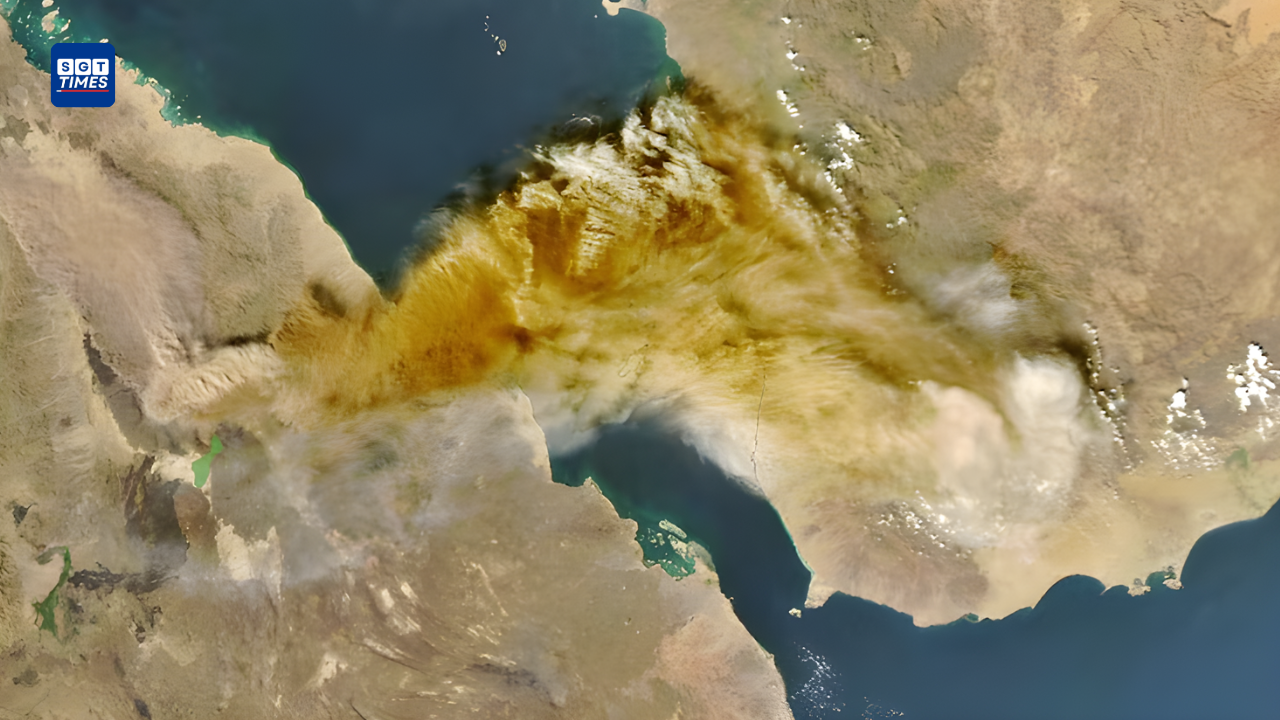
A rare geological event occurred this week as Ethiopia’s Hayli Gubbi volcano erupted for the first time in nearly 10,000 years. Satellite imagery captured the dramatic explosion, marking one of the most significant volcanic awakenings recorded in modern science. The eruption took place on Sunday morning in the northeastern Afar region, sending towering ash clouds soaring up to 45,000 feet.
The volcanic plume drifted rapidly across the Red Sea, passing over Yemen and Oman before reaching the Arabian Sea. High-altitude winds then carried the ash into Indian airspace, spreading it across Gujarat, Rajasthan, Delhi-NCR, Punjab, Haryana, and parts of Maharashtra. The ash cloud continued its journey toward the Himalayas, affecting Nepal’s hill regions before eventually moving eastward toward China.
According to the India Meteorological Department (IMD), the ash clouds are expected to clear from Indian skies by 7:30 PM on Tuesday. IMD Director General Mrutyunjay Mohapatra explained that strong westerly winds transported the ash from Ethiopia across multiple regions, highlighting the interconnected nature of atmospheric patterns.
The eruption has attracted global scientific attention due to the volcano’s long dormancy. There has been no recorded activity from the Hayli Gubbi volcano during the Holocene epoch, making this event exceptionally rare. Satellite data from the European Space Agency’s Sentinel-2 and observations from the Toulouse Volcanic Ash Advisory Center confirmed the rapid spread of the ash plume over thousands of kilometers.
The movement of volcanic ash caused significant disruptions to flight operations across India on Monday. Several flights were canceled or rerouted as authorities prioritized passenger safety. The IMD and various Volcanic Ash Advisory Centers collaborated closely to monitor the situation and issue timely alerts to aviation agencies.
While the dispersion of ash was widespread, the actual ashfall in India remained minimal. However, the plume carried sulfur dioxide and fine volcanic particles, raising air quality concerns in several areas. Environmental experts noted that even though these effects may be short-lived, they can impact respiratory health and visibility.
The eruption also highlights the geological volatility of the Afar Rift region, which is known as one of the most active tectonic zones on Earth. Volcanologists emphasized that satellite monitoring plays a crucial role in detecting sudden eruptions, aiding authorities in preparing for potential hazards that can affect international air travel and regional weather systems.
Overall, the eruption of the Hayli Gubbi volcano after thousands of years has become a landmark global event. It underscores the need for advanced monitoring technologies and coordinated meteorological responses to mitigate the impacts of major natural phenomena.