Delhi’s Air Quality Worsens Again as AQI Nears ‘Very Poor’ Mark
Delhi’s air quality took another hit on Monday as the Air Quality Index (AQI) rose to 298, edging close to the ‘very poor’ category. This increase occurred just a day after strong winds temporarily lowered the AQI to 279, providing the city with a brief reprieve from persistent pollution.
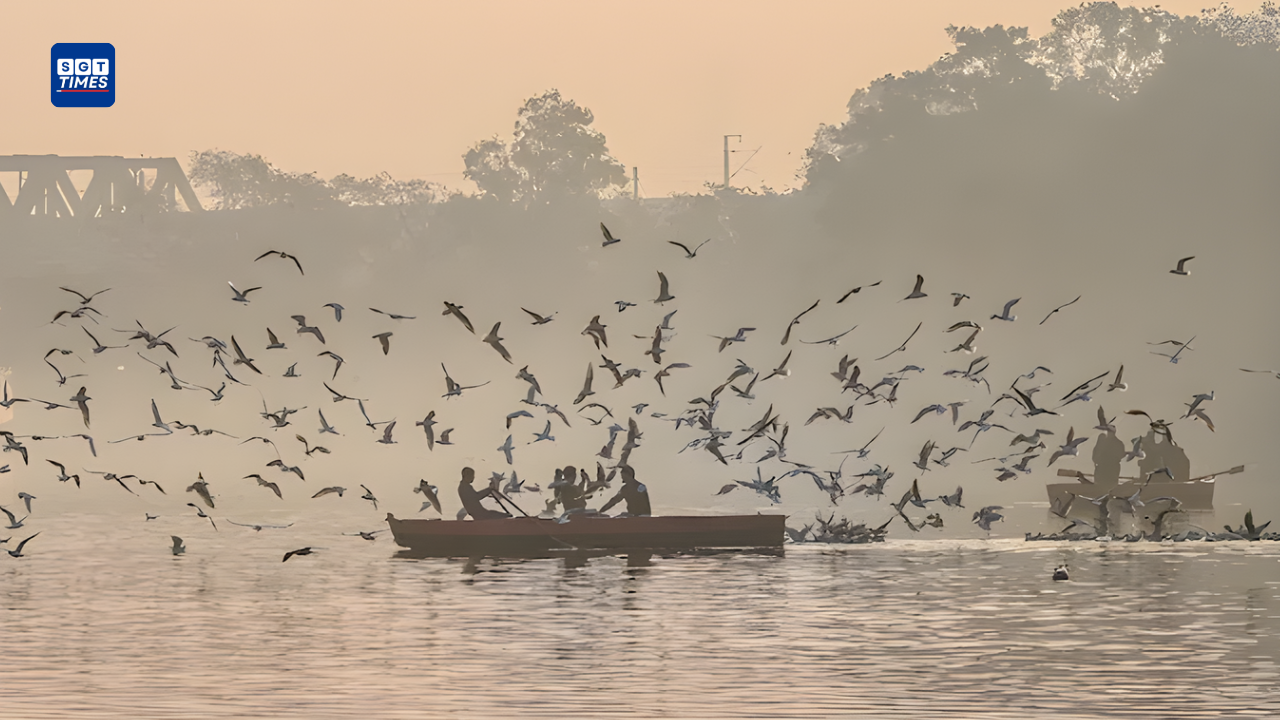
At 7 am, data from the Central Pollution Control Board (CPCB) revealed a thick layer of fog and smoke over the national capital. Of Delhi’s 39 monitoring stations, at least 22 recorded AQI levels in the ‘very poor’ range. According to CPCB standards, an AQI between 201 and 300 is classified as ‘poor,’ while an AQI of 301 to 400 falls under the ‘very poor’ category. Nehru Nagar in South Delhi reported the highest AQI at 351. In contrast, NSIT Dwarka recorded an AQI of 195, remaining in the ‘moderate’ category.
Several major pollution hotspots, including Anand Vihar (323), Bawana (337), Burari Crossing (304), Jahangirpuri (319), Mundka (330), Punjabi Bagh (326), Shadipur (325), and Wazirpur (321), reported significantly high levels of particulate pollution.
In the National Capital Region, Noida emerged as the most polluted city with an AQI of 316. Faridabad reported the lowest AQI in the region at 208, while Greater Noida and Ghaziabad measured AQIs of 288 and 291, respectively.
Delhi’s Jan–Nov AQI Lowest Since 2018
The Commission for Air Quality Management (CAQM) reported that Delhi recorded its lowest average AQI for the January to November period since 2018, excluding the COVID-affected year of 2020. This year’s average stands at 187, compared to 201 in 2021 and 190 in 2022. Only three days between January and November saw AQI exceed the 400 ‘severe’ mark, which is significantly fewer than in previous years. PM2.5 levels for the same period were also the lowest since 2018, except for 2020, standing at 85 micrograms per cubic meter. PM10 levels showed a similar improvement trend.
Temperature Drops as Winter Deepens
Alongside the deteriorating air quality, Delhi’s temperature also dropped. The minimum temperature settled at 8.3°C—two degrees below normal—while the maximum reached 24.3°C. This November has been the coldest in five years, with the average minimum temperature dropping to 11.5°C.
The India Meteorological Department (IMD) forecasts suggest that temperatures will continue to hover around 24°C (max) and 8°C (min) throughout the day.