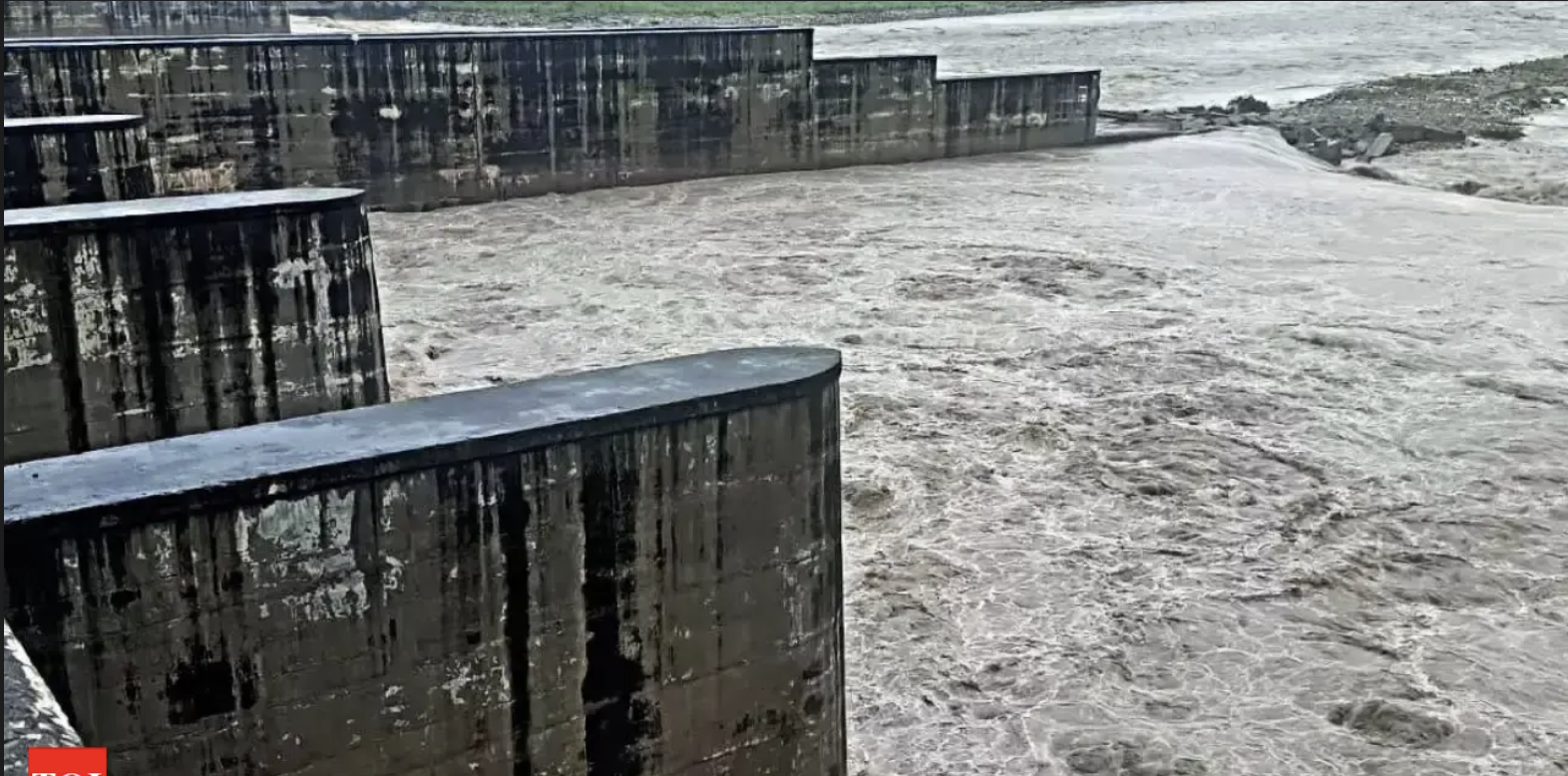
1.78 Lakh Cusec Released From Hathnikund Barrage
Heavy rainfall in North India has caused significant increases in water levels across several rivers, prompting authorities to issue flood alerts in multiple regions. On Sunday, the flow of the Yamuna River at the Hathnikund barrage in Yamunanagar rose to 178,000 cusecs, marking the highest level recorded this monsoon season.
This discharge, classified as a “medium flood,” led officials to open all 18 floodgates of the barrage. According to the Irrigation and Water Resources Department, flows ranging from 150,000 to 250,000 cusecs are considered medium floods.
The sudden release of water is expected to affect low-lying areas in Yamunanagar, Karnal, Panipat, and Sonepat in Haryana. The Central Water Commission has already issued an alert for Delhi, warning that it will take approximately 48 hours for the water to reach the national capital.
In addition to the Yamuna, other rivers in the Yamunanagar district, including the Som and Pathrala, have also swollen following heavy downpours. The Som River was observed flowing dangerously above the bridge at Dhanaura village, causing panic among residents and commuters.
Local administrations have intensified preparations to manage potential flooding. Reinforcements have been added to embankments in villages such as Ranjitpur, Ranipur, and Khanuwala. Police patrols and disaster response teams have been deployed to monitor vulnerable areas.
Rainfall has been widespread throughout the region, with Pratap Nagar recording 99 mm and Jagadhari 78 mm of rain, among other towns experiencing similar heavy showers. Officials have assured residents that they are fully prepared to handle the situation and have urged those in flood-prone areas to remain cautious.
The situation highlights the impact of erratic monsoon patterns in northern states, where significant rainfall in upstream catchment areas can quickly lead to flood risks downstream. Authorities continue to closely monitor river levels as rainfall persists in the region.