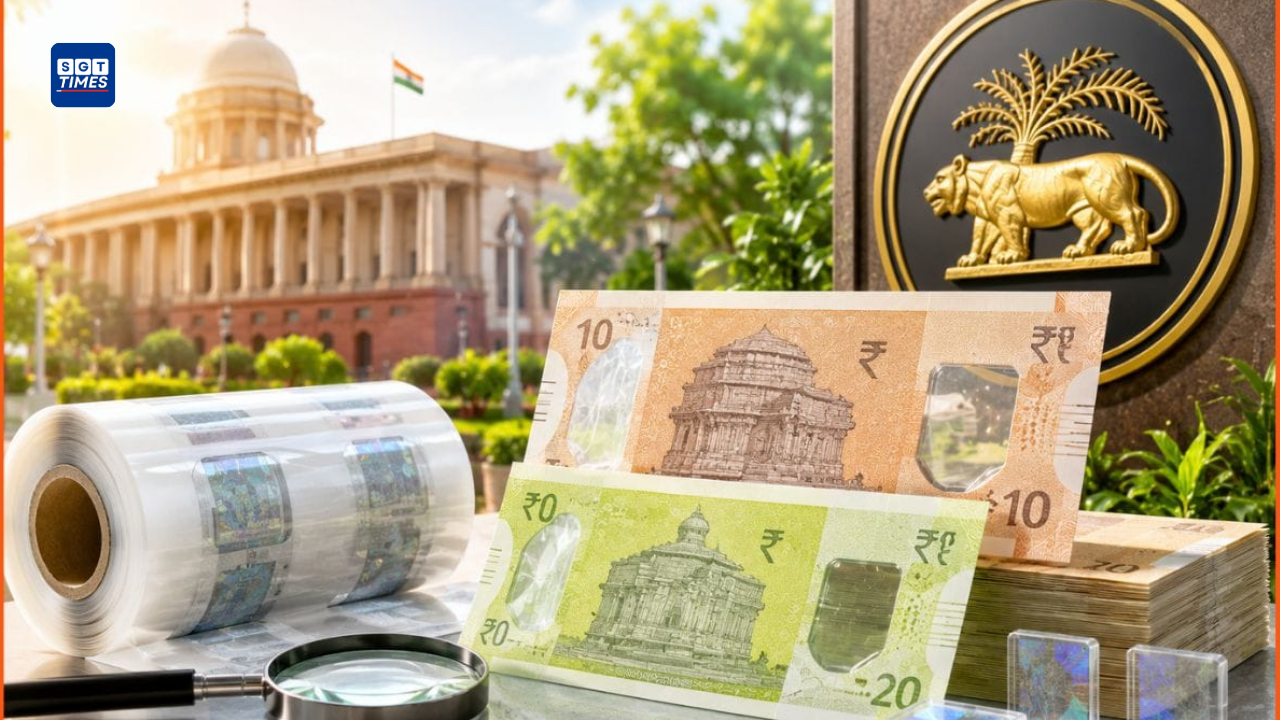
Government Approves RBI Proposal for Polymer ₹10 and ₹20 Banknotes
The government has approved the Reserve Bank of India’s proposal to introduce polymer banknotes in the denominations of ₹10 and ₹20, marking the beginning of a trial phase for a new type of currency in India. This development was announced in the Lok Sabha by Minister of State for Finance Pankaj Chaudhary in a written reply. According to the minister, the RBI plans to introduce one billion pieces each of ₹10 and ₹20 polymer banknotes for field trials. This initiative aims to test the performance of the notes before any decision is made regarding their regular issuance.
So, what distinguishes polymer notes from the paper currency currently in use? One key advantage is their durability. The RBI has informed the government that international studies indicate that polymer banknotes typically have a significantly longer lifespan than paper notes. This could potentially reduce the frequency with which certain low-denomination notes need to be replaced. However, the proposed polymer notes are still in a preliminary stage. Their regular circulation will depend on the results of the field trials. The government has not indicated any plans to discontinue paper currency as part of this proposal.
The RBI has suggested that, if introduced regularly, polymer banknotes would be issued alongside existing paper banknotes. This means that people could see both types of notes in circulation rather than an immediate transition from paper to polymer currency.
Another factor to consider is the impact of polymer banknotes on India’s growing digital payment ecosystem. The minister mentioned that this impact could only be assessed after the polymer notes are issued regularly and their usage is evaluated. For now, the focus remains on testing the proposed ₹10 and ₹20 polymer notes. The field trials will provide the RBI and the government with practical information regarding their durability and performance before any wider rollout.
In summary, this proposal represents an early step rather than an immediate change to the currency people carry in their wallets. If the trials are successful, polymer banknotes could eventually become a part of India’s currency system, while paper notes would continue to remain in circulation.