PM Announces Next-Gen GST Reforms; New Rates Starting from Monday to Impact Auto Sector
In a landmark move towards simplifying India’s tax structure and easing the financial burden on citizens, Prime Minister Narendra Modi has announced the next generation of GST reforms. The new tax rates will officially come into effect starting Monday, with the automobile sector set to witness a major impact.
The GST Council, in its meeting on September 3, introduced a series of reforms that rationalize tax rates across multiple segments of the auto industry. The changes are designed not only to provide relief to consumers but also to strengthen demand and boost the economy.
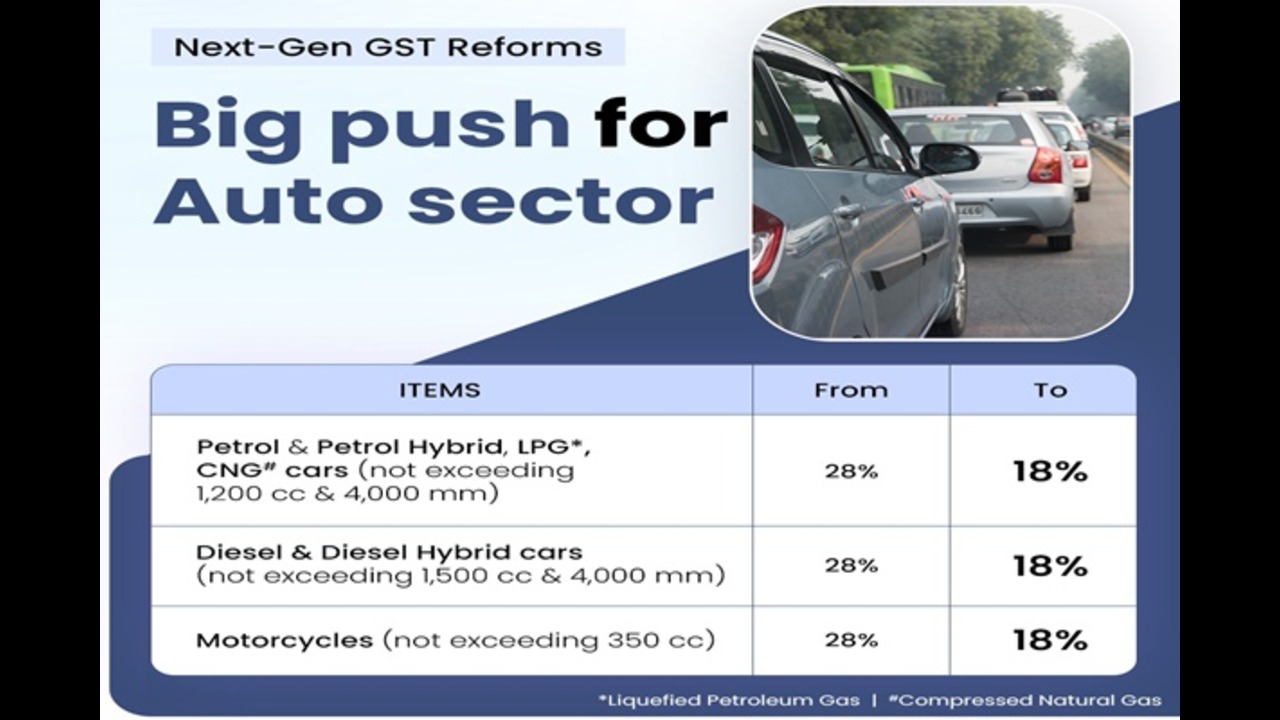
One of the key reforms includes the reduction of GST on automobile components. Previously taxed at 28%, these essential parts will now fall under the 18% GST slab. This is expected to lower manufacturing costs and, in turn, reduce the prices of cars and motorbikes for consumers.
The Council has also announced a steep cut in GST for buses with a seating capacity of up to 10 persons. The rates have been brought down from 28% to 18%. This measure aims to make public transport more affordable, encouraging citizens to shift towards buses, which will help reduce both congestion and pollution in cities.
In addition, tractors up to 1800cc will now be taxed at just 5% GST, a significant reduction that is expected to benefit farmers and the agricultural sector. This move is expected to stimulate demand in both domestic and export markets, strengthening India’s position in the global agricultural equipment industry.
The reforms have already struck a chord with the public. Speaking to the media, SVK Vinodh, a resident of Tamil Nadu, expressed his gratitude, stating, “Due to the reduction in GST, the dream of middle-class families to buy their own vehicle has become a reality.”
This rationalization under the next-generation GST reforms is set to ease the financial strain on middle-class families and make vehicle ownership more accessible. By cutting costs across cars, bikes, buses, and tractors, the government aims to drive higher demand, stimulate sales, and boost economic growth.
With the reforms taking effect from Monday, industry experts predict a surge in automobile sales and increased affordability for consumers across the country. The government’s proactive step not only supports the common man but also aligns with long-term economic and environmental goals.