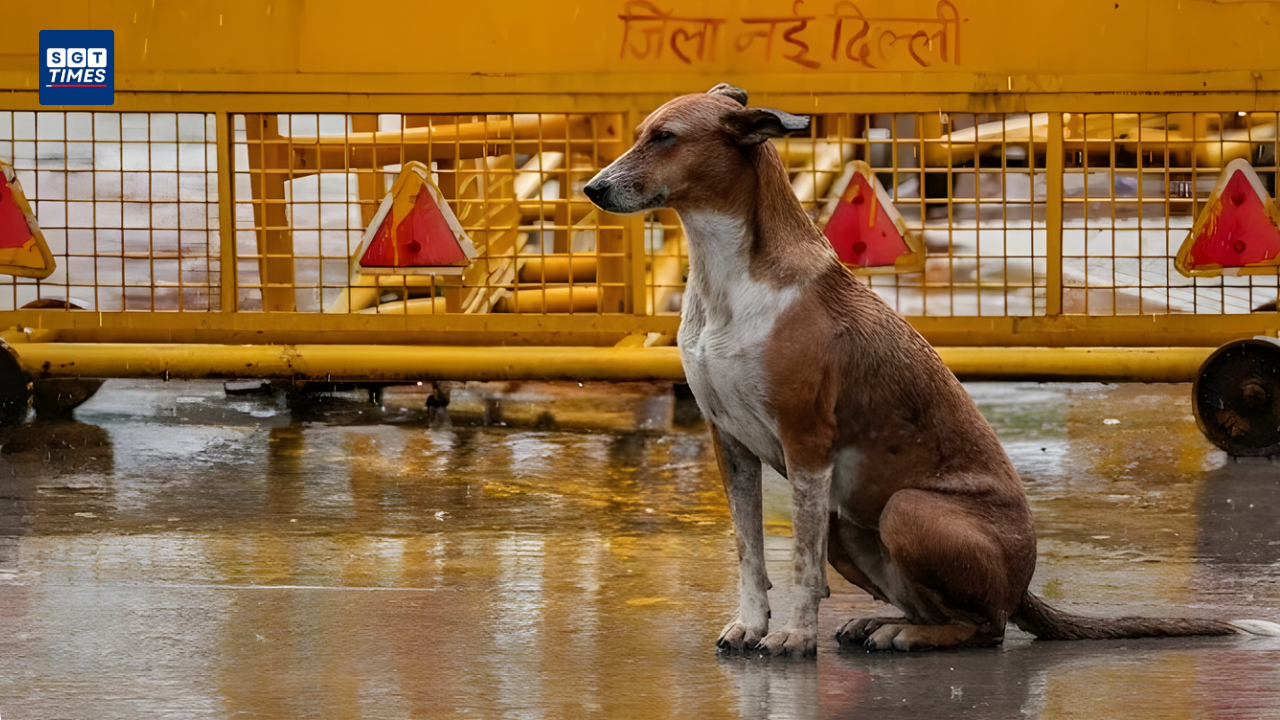
Supreme Court Orders Removal of Stray Dogs From Public Institutions
The Supreme Court of India has issued an important directive addressing the increasing number of stray dogs in public spaces. On November 7, 2025, the Court took suo motu cognizance of the rising incidents of dog bites across the country and ordered that all government and public institutions must be fenced and secured to prevent the entry of stray dogs. This includes schools, colleges, hospitals, bus stands, sports complexes, depots, and railway stations.
A Bench consisting of Justices Vikram Nath, Sandeep Mehta, and N.V. Anjaria noted the “alarming rise” in dog-bite cases, which pose a risk to citizens, particularly children, patients, and the elderly. The Bench observed that in various public offices, employees often support or feed stray dogs, encouraging these animals to remain on the premises. The Court stated that this practice undermines public safety.
The Supreme Court clarified that the responsibility for implementing this order lies with local authorities, who must ensure that stray dogs found in these institutions are safely captured and relocated to designated animal shelters. Furthermore, these dogs must be vaccinated and sterilized according to the Animal Birth Control Rules, 2023.
Importantly, the Court emphasized that once the dogs are relocated, they must not be released back into the same locality. The Court remarked that allowing this would defeat the purpose of freeing such institutions from the presence of stray dogs. It stressed that public institutions should be safe spaces where people can move without fear of dog attacks.
This directive comes amid growing public concern and numerous reports of serious injuries due to dog bites in recent months. Experts point to rapid urbanization, improper waste disposal, and a lack of coordinated animal control measures as contributing factors to the increase in stray dog populations. The Supreme Court’s order aims to establish a structured system to address this issue without harming the animals.
The Court also highlighted the necessity for government bodies to properly fence their premises to physically prevent the entry of stray dogs. This, combined with the measures of relocation and sterilization, is expected to significantly reduce incidents of dog bites.
Animal welfare organizations have welcomed the requirements for vaccination and sterilization, but have urged authorities to ensure that the relocated dogs are kept in proper living conditions in shelters.
As this ruling takes effect, local bodies across the country will begin identifying sensitive zones and preparing shelters for the relocation of these dogs. The Supreme Court has mandated strict compliance and may require progress reports from states in the coming months.