Delhi’s Air Quality Near Severe as Protest Over Pollution Turns Chaotic
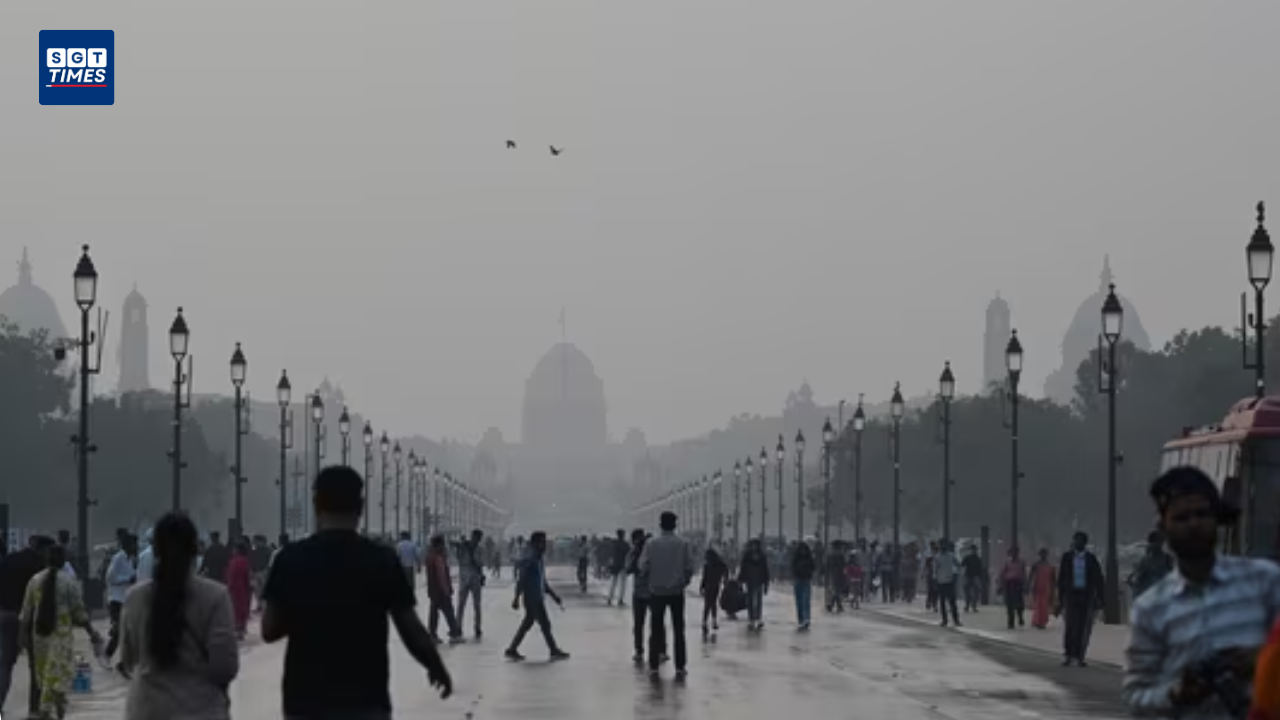
Delhi continued to suffer from extremely poor air quality on Monday morning, with the overall Air Quality Index (AQI) recorded at 397 at 6 a.m., according to data from the Central Pollution Control Board (CPCB). Out of 39 monitoring stations across the national capital, 20 reported AQI levels exceeding 400, which falls into the ‘severe’ category. The remaining 19 stations registered ‘very poor’ levels between 300 and 400, highlighting the widespread pollution crisis.
The city’s air quality has remained in the ‘inferior’ category for nearly 18 consecutive days since November 6, with three days between November 11 and 13 slipping into the ‘severe’ zone. Contributing factors include low wind speeds, low temperatures, the onset of winter, and farm fires following Diwali, which result in a toxic haze. Some of the worst-affected areas included Vivek Vihar and Rohini, with AQI readings of 458; Jahangirpuri at 455; Wazirpur at 448; and DTU at 444.
On Sunday at 4 p.m., Delhi’s 24-hour average AQI stood at 391, reflecting a steady decline from 370 on Saturday and 364 on Friday. Prolonged exposure to this hazardous air has raised significant health concerns. Hospitals have reported an increase in respiratory, ocular, and pulmonary issues, prompting doctors to issue warnings and advisories. In response, the government has activated Stage 4 measures of the Graded Response Action Plan (GRAP), which is implemented when air quality reaches severe levels.
Protest Over Pollution Turns Chaotic
As public frustration grew over the deteriorating air quality, several citizens gathered at India Gate on Sunday evening to protest and demand urgent action. However, the demonstration turned chaotic when some protesters allegedly used chili spray on police officers as authorities attempted to disperse the gathering.
According to officials, the protesters had assembled near the C-Hexagon, obstructing the movement of ambulances and medical vehicles. When police tried to clear the path, a scuffle broke out. A senior officer informed PTI that some demonstrators used chili powder on police personnel, marking an unexpected escalation during what was initially a peaceful protest.
Deputy Commissioner of Police (New Delhi) Devesh Kumar Mahla described the incident as “very unusual,” noting that several officers suffered irritation in their eyes and face and were taken to RML Hospital for treatment. Legal action has been initiated against those involved.
The protesters expressed that rising pollution has made survival difficult, and they felt compelled to raise their voices. This event reflects growing public anxiety about the city’s worsening environmental and health crisis.