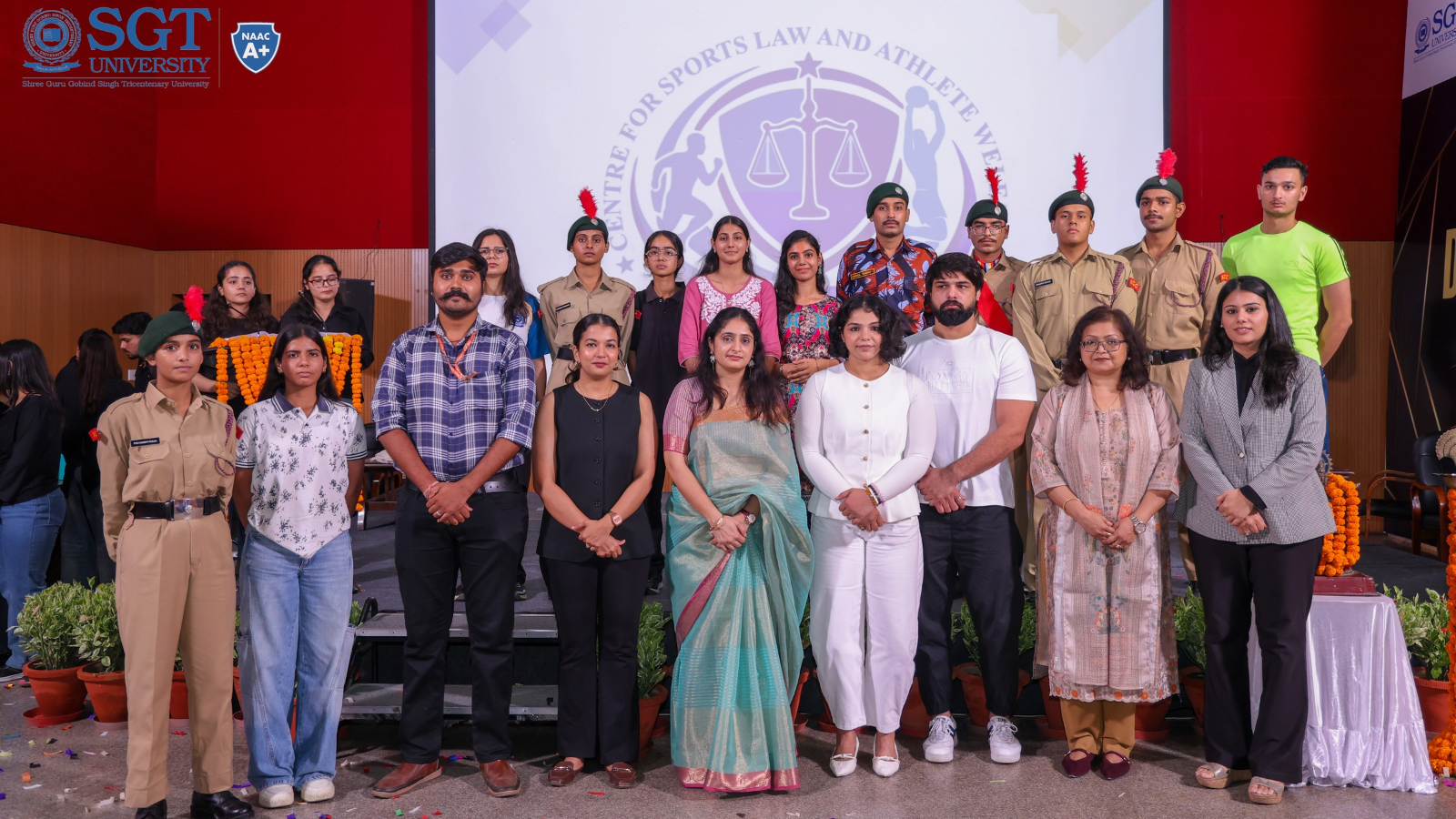
SGT University Launches Centre for Sports Law and Athlete Welfare
The School of Law at SGT University, Gurugram, launched the Centre for Sports Law & Athlete Welfare (CSLAW) on October 8, marking a significant step towards strengthening sports law education, research and awareness of athletes’ rights.
Olympic medallist and wrestler Sakshi Malik attended the programme as Chief Guest. Prof. (Dr.) Ruhi Paul, UNESCO Chairholder for the Legal Dimensions of Clean Sports at the National Law University, Delhi, joined as the Guest of Honour. The event drew attention to the growing relationship among sport, legal frameworks, and athlete welfare.
The programme opened with a performance by the National Cadet Corps (NCC), followed by the formal launch of the centre and the unveiling of its logo. The launch highlighted the importance of understanding the legal and ethical frameworks that shape modern sport.
Sports today extend beyond competition on the field. Contracts, sponsorship agreements, athlete rights, dispute resolution, anti-doping regulations and sports governance all play an important role in the sporting ecosystem. CSLAW aims to provide a platform where these subjects can be explored through academic dialogue, research and practical learning.
The centre will work towards promoting awareness of legal challenges faced by athletes and creating opportunities for students to engage with emerging areas of sports law. Interaction with athletes, legal professionals and sporting stakeholders is expected to form an important part of its academic approach.
The initiative also seeks to encourage research and professional development, with a focus on contributing to the sporting ecosystem in Haryana and beyond.
By bringing legal education and athlete welfare together, CSLAW aims to strengthen understanding of fairness, accountability and rights within sport. Its launch represents a new initiative at SGT University’s School of Law, offering students a dedicated platform to examine the legal dimensions of contemporary sports and the responsibilities of institutions involved in the field.