Cyclone Ditwah Causes Sri Lanka’s Worst Flooding in Decades
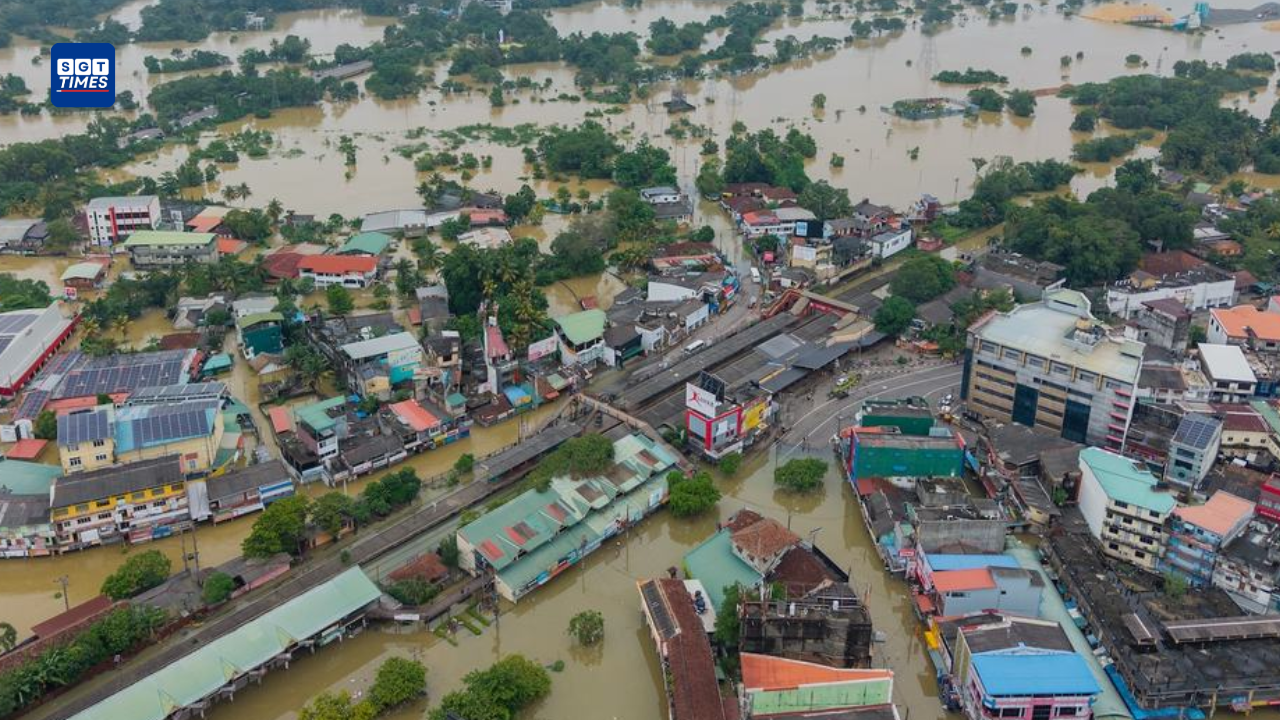
Sri Lanka is experiencing its worst flooding in decades following the passage of Cyclone Ditwah, which has caused widespread devastation across all 25 districts. According to the UN Office for the Coordination of Humanitarian Affairs (OCHA), nearly 998,918 people have been affected, with 212 confirmed deaths and 218 individuals reported missing. Over 180,000 people from more than 51,000 families are currently seeking refuge in 1,094 government-run safety centers.
Cyclone Ditwah made landfall on November 28 before moving back over the Bay of Bengal, unleashing torrential rains that triggered severe flooding reminiscent of disasters experienced in the early 2000s. The hardest-hit districts include Gampaha, Colombo, Puttalam, Mannar, Trincomalee, and Batticaloa. Additionally, deadly landslides in the hill regions have devastated Kandy, Badulla, and Matale.
Initial assessments indicate that over 15,000 homes have been destroyed. More than 200 roads, 10 bridges, and various sections of the railway and power grid have sustained significant damage. Flooding along the Kelani River, which flows through Colombo, continues to hinder rescue operations and communication with affected communities.
Northern districts, including Jaffna, are also facing major disruptions to electricity, mobile networks, and transportation, leaving several villages completely cut off. Access to clean water is becoming increasingly concerning, with many areas reporting limited or no supply.
Sri Lanka’s already fragile healthcare system is under immense pressure. Several hospitals remain flooded and are receiving only limited supplies. Critically ill patients are being airlifted to functioning medical facilities. Landslides and breaches of multiple tank bunds, including the one at Mavilaaru, have further complicated rescue efforts, particularly in Trincomalee and Batticaloa.
The government has warned of rising food insecurity due to submerged farmland, damaged storage facilities, and blocked supply routes. These factors could lead to shortages and price spikes in the coming weeks. The World Health Organization (WHO) has issued warnings about increased risks of water-borne, vector-borne, and food-borne diseases in the aftermath of the floods.
The United Nations has activated its emergency coordination system to support rescue and early recovery operations in Sri Lanka. Sectoral coordination teams are being mobilized across food security, health, WASH (Water, Sanitation, and Hygiene), protection, shelter, and education. UNICEF is already delivering potable water to isolated safety centers in Badulla.
India and Pakistan have also deployed emergency response teams to assist Sri Lankan authorities in the hardest-hit regions.
Across the wider Asian region, severe monsoon flooding continues to affect Thailand, Malaysia, and Indonesia, where hundreds of deaths and mass displacement have been reported.