IIT Bombay Develops Leaf-Based Cooking Fuel Technology
In a significant advancement towards sustainable energy solutions, IIT Bombay has developed an indigenous technology for converting dry leaves into cooking fuel. This innovation aims to reduce dependence on Liquefied Petroleum Gas (LPG), especially amidst rising prices and supply concerns.
The project is led by Sanjay Mahajani from the Department of Chemical Engineering and has been the result of nearly a decade of research that started in 2014. The technology is based on biomass gasification, a process that transforms organic waste into usable fuel.
Professor Mahajani explained that the IIT Bombay campus generates a substantial amount of dry leaves and twigs due to its extensive green cover. Instead of allowing this biomass to go to waste, the research team sought ways to harness its energy potential for internal use, particularly for cooking and thermal applications.
The process begins with the conversion of dry leaves into compact pellets, which are then fed into a specially designed gasifier. Through gasification, these pellets are transformed into ‘producer gas,’ a combustible mixture primarily composed of carbon monoxide and hydrogen.
One of the major challenges the team addressed was the reduction of emissions. Traditional biomass burning releases high levels of particulate matter. However, the IIT Bombay gasifier has been engineered to significantly minimize emissions, making the process cleaner and more efficient.
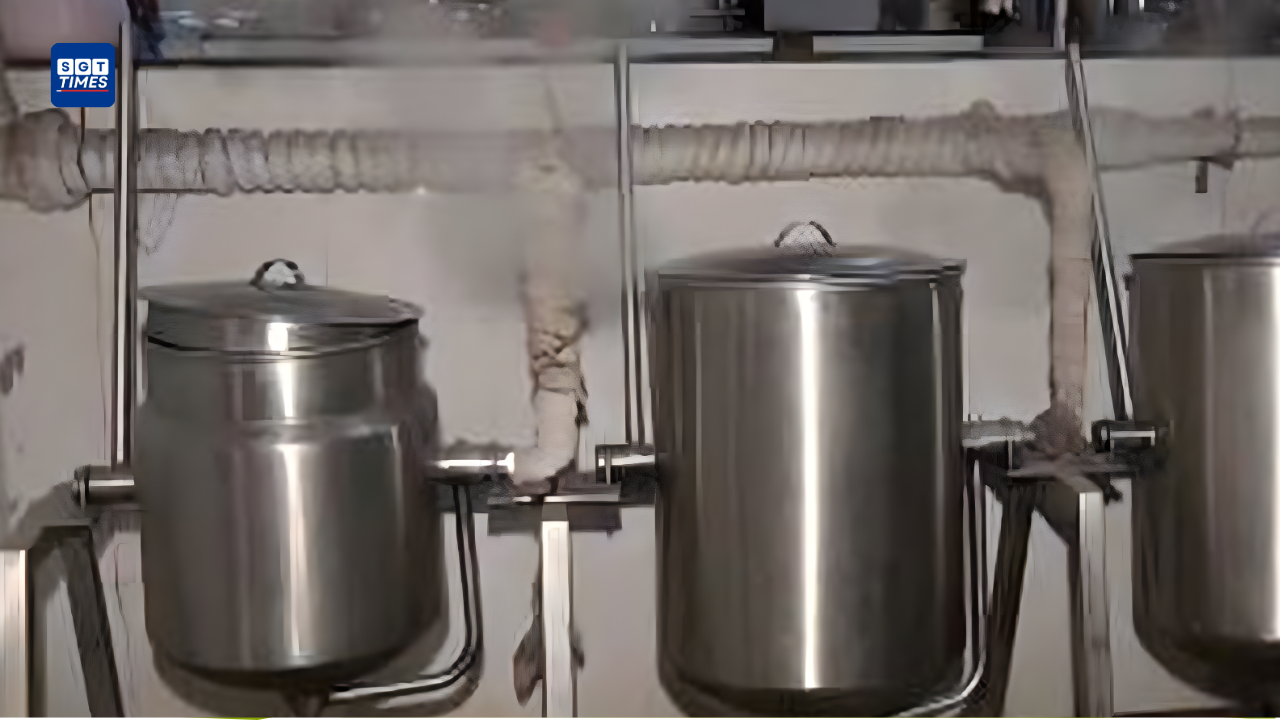
The generated producer gas is immediately combusted to release energy, which is then used to produce steam. This steam is supplied to the campus canteen, where it powers cooking equipment and other food preparation processes.
This breakthrough not only provides a sustainable alternative to LPG but also promotes efficient waste management. The innovation reflects India’s increasing focus on clean energy solutions and could pave the way for broader adoption of biomass-based fuel technologies across institutions and communities.