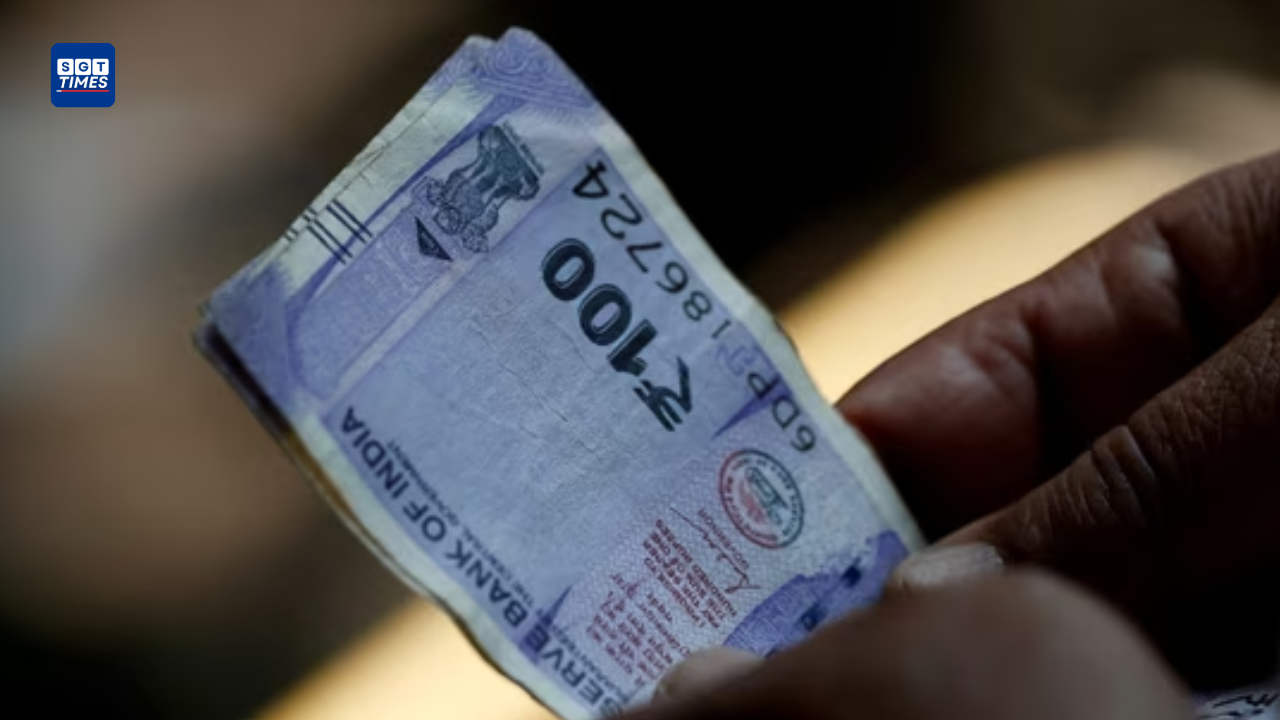
Rupee Drops to ₹90 Per Dollar as Trade Deal Delays Hit Market
The Indian rupee fell to a new all-time low on Wednesday, reaching ₹90.13 per US dollar in early trading before stabilizing at around ₹90.26, according to market data. This represents the most significant decline in recent months and places the rupee among the worst-performing global currencies of 2025, as reported by AFP.
The sharp decline is primarily linked to ongoing uncertainty surrounding the India–US trade deal, which analysts say has severely impacted investor sentiment and currency stability. The rupee had already surpassed its previous record low of ₹89.94 on Tuesday, raising alarm across financial markets.
Reasons for the Rupee’s Decline
According to Dilip Parmar, an analyst at HDFC Securities, the rupee’s drop is mainly due to an imbalance between dollar demand and supply, exacerbated by foreign fund outflows and uncertainty regarding trade negotiations. As investors become more cautious, the ongoing delays in the bilateral trade agreement have added to the downward pressure on the currency.
Another key factor influencing the rupee’s movement is the inconsistent intervention by the Reserve Bank of India (RBI). While the RBI has occasionally intervened with aggressive dollar sales to stabilize the rupee, analysts believe the central bank is increasingly allowing greater currency flexibility, focusing instead on supporting domestic economic growth.
Raj Gaikar from SAMCO Securities noted that with inflation currently lower than expected, the RBI seems to prioritize growth over preserving foreign reserves to maintain a fixed currency level.
Adding to these insights, Joey Chew, head of Asia FX research at HSBC, emphasized that each day without progress on the India–US trade deal creates continued upward pressure on the USD/INR exchange rate. With reduced foreign exchange supply and limited inflows, investor impatience is growing.
Government’s Response
Despite these concerns, Chief Economic Adviser V. Anantha Nageswaran stated that the weakening rupee is not a cause for alarm. He explained that the depreciation would not significantly affect inflation or exports. Speaking at an event in Kolkata, he also expressed optimism about the possibility of the US reducing or removing the additional 25% tariff imposed on India. He suggested that both countries might soon resolve, potentially easing reciprocal tariffs to levels previously anticipated.
As global conditions remain uncertain and trade negotiations continue, markets will closely monitor the rupee’s performance in the upcoming days.