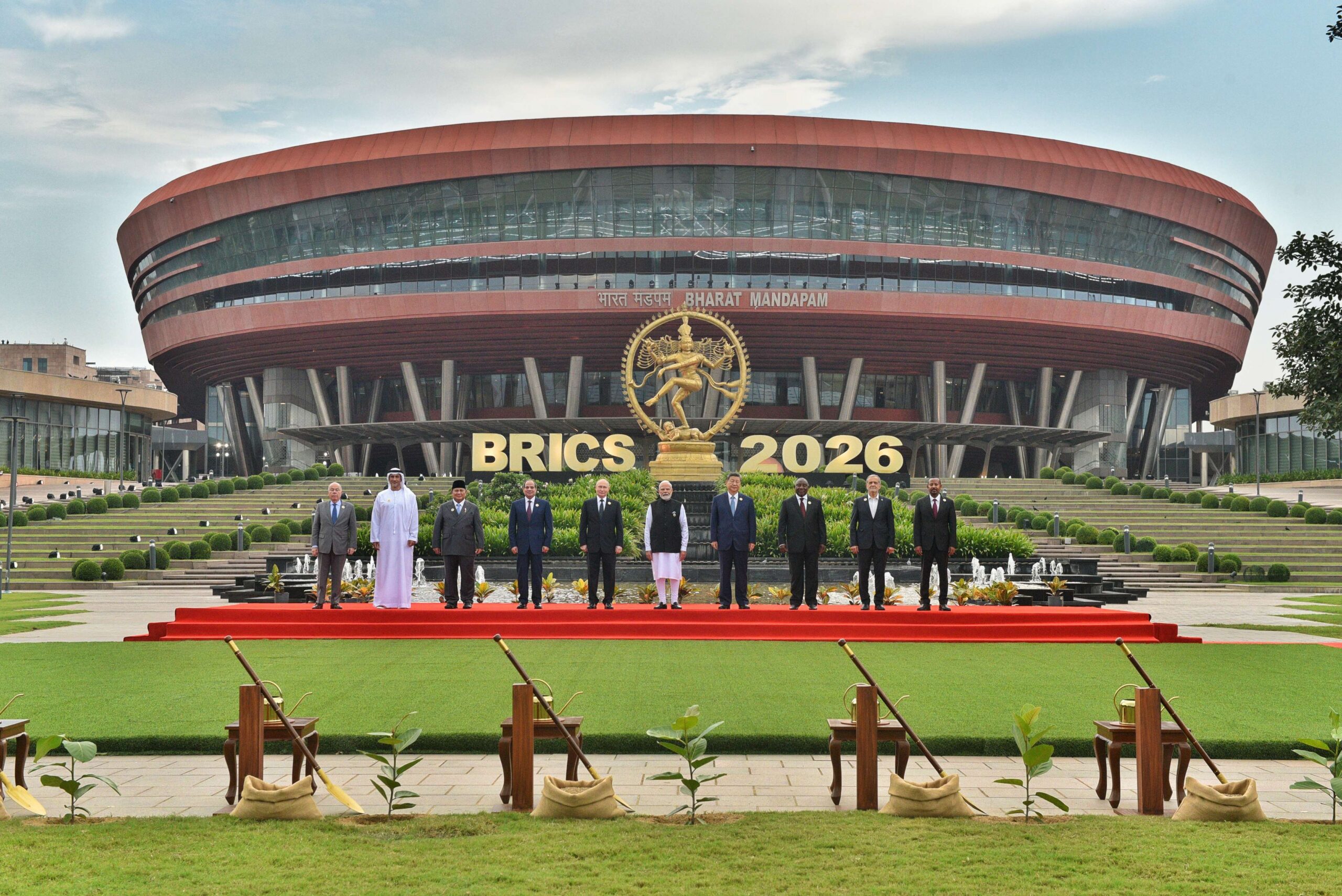
BRICS Summit in New Delhi Addresses Global Conflicts, Trade and Development
New Delhi, September 14: The 18th BRICS Summit, hosted by India in New Delhi on September 12–13, brought together leaders of the expanded grouping to discuss major global challenges, including conflicts, trade disruptions, energy security, food security and reforms to international institutions.
Held under the theme “Building for Resilience, Innovation, Cooperation and Sustainability,” the summit concluded with the adoption of the New Delhi Declaration. The document highlighted the need for stronger cooperation among emerging economies and called for a more representative and inclusive global order.
Global conflicts dominate discussions
The BRICS leaders expressed concern over continuing conflicts and rising tensions in several regions. The declaration called for maximum restraint in the Middle East and urged all parties to avoid actions that could further intensify instability.
The leaders also reiterated their opposition to the forced displacement of Palestinians and supported efforts towards a ceasefire, humanitarian access in Gaza and a political solution to the Palestinian issue. The declaration further stressed the importance of protecting civilian infrastructure and maintaining international peace and security.
The Ukraine conflict and broader geopolitical tensions also featured in discussions. Despite differences among member countries, the grouping sought to maintain consensus on diplomacy, dialogue and the peaceful settlement of disputes.
Focus on trade and economic cooperation
Trade and economic cooperation remained central to the summit agenda. BRICS leaders raised concerns over unilateral tariffs, protectionist measures and restrictions that could disrupt global trade and supply chains.
The declaration called for a fairer international economic system that gives developing and emerging economies a stronger voice in global decision-making. Leaders also supported greater use of national currencies in trade and continued discussions on more interoperable cross-border payment systems.
The summit also renewed calls for reforms in global financial institutions and the United Nations system. BRICS countries argued that current structures do not adequately reflect the growing contribution of developing economies to global growth.
Food, energy and technology cooperation
India placed particular emphasis on resilience in agriculture, food systems, energy supplies and critical supply chains. BRICS cooperation is expected to expand in areas such as food security, climate change, disaster-risk reduction, healthcare and sustainable development.
Artificial intelligence and emerging technologies were another important area of discussion. Leaders backed cooperation aimed at ensuring that AI is safe, secure, inclusive and accessible, particularly for developing countries. They also highlighted the importance of digital innovation in improving public services, economic growth and development.
India highlights Global South priorities
As the 2026 BRICS chair, India used the summit to promote the concerns of the Global South. New Delhi emphasised the need for inclusive growth, resilient supply chains, sustainable development and stronger cooperation among developing nations.
The summit demonstrated BRICS’ expanding role in discussions on global governance. However, differences among members on geopolitical conflicts and strategic priorities remain a challenge for the grouping. The adoption of a joint declaration nevertheless reflected an effort to preserve dialogue and practical cooperation among countries with varied national interests.thehindu+1
The New Delhi Summit concluded with a renewed commitment to multilateralism, economic cooperation and a greater role for emerging economies in shaping the global agenda.