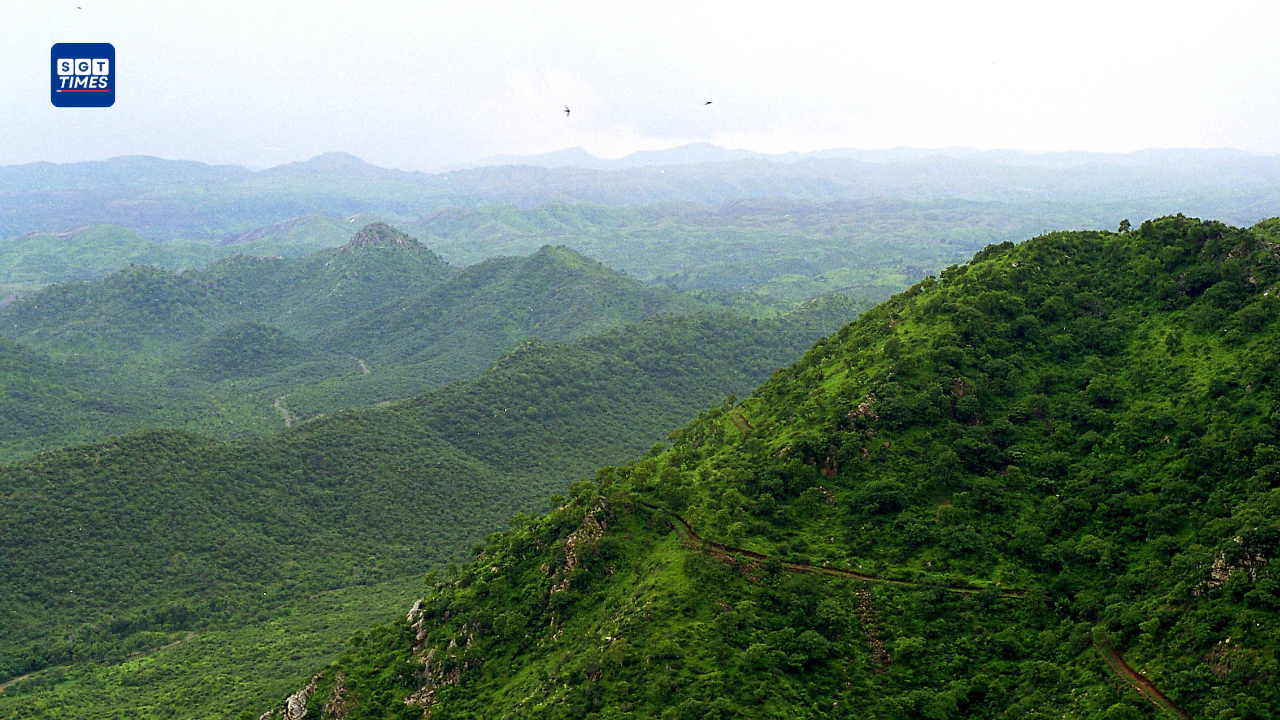
Centre Imposes Complete Ban on New Mining in Aravalli Range
In a significant move to protect one of the world’s oldest mountain systems, the government has ordered states to implement a complete ban on new mining leases across the Aravalli range. This decision comes in response to public concerns and legal scrutiny regarding a newly accepted definition of the Aravalli hills.
The Union Ministry of Environment, Forest and Climate Change has stated that the directive focuses on the “conservation and protection” of the Aravallis, which extend from Gujarat to the National Capital Region (NCR). The ministry emphasized the importance of preserving the range as a continuous geological ridge and curbing unregulated mining activities that threaten its ecological balance.
As part of this initiative, the Indian Council of Forestry Research and Education (ICFRE) has been tasked with identifying additional areas within the Aravalli region where mining should be strictly prohibited. These areas will be selected based on ecological sensitivity, geological significance, and landscape-level assessments, extending beyond the areas already designated by the Centre.
The government has also announced plans to expand the list of protected and restricted zones across the Aravalli range. For existing mines, state governments have been directed to ensure strict compliance with environmental safeguards and adherence to current Supreme Court orders.
Earlier this week, Union Environment Minister Bhupender Yadav reiterated that no new mining leases would be permitted, particularly in core, protected, and ecologically sensitive areas, including the NCR. Addressing concerns about the Supreme Court’s acceptance of a new definition of the Aravalli hills, Yadav stated that the ruling acknowledges the Centre’s ongoing efforts to protect the range through scientific assessments and policy measures.
The Supreme Court has defined any landform in the Aravalli districts with an elevation of 100 meters or more from local relief as part of the Aravalli hills. However, this classification has raised concerns among environmentalists and stakeholders, who fear that more than 90 percent of the range could be left open to mining, as most landforms fall below the 100-meter threshold.
Highlighting ongoing conservation efforts, the minister pointed to initiatives such as the Aravalli Green Wall Project, the expansion of Ramsar sites, large-scale afforestation drives, and international recognition of India’s forest cover. He added that the government remains committed to balancing economic development with ecological protection while countering misinformation with scientific evidence.
This latest directive marks a crucial step in strengthening environmental governance and protecting the fragile Aravalli ecosystem from further degradation.