India Commissions World’s First Nuclear Heat-Based Hydrogen Production Facility
India has made a significant advancement towards a cleaner and more sustainable future by launching the world’s first hydrogen production facility that utilizes nuclear process heat. The landmark project was inaugurated on Friday at the Indira Gandhi Centre for Atomic Research (IGCAR) in Kalpakkam, Tamil Nadu, positioning the country at the forefront of advanced clean energy technologies.
This demonstration facility was developed by the Department of Atomic Energy (DAE) in collaboration with the Bhabha Atomic Research Centre (BARC). It employs the Copper-Chlorine (Cu-Cl) thermochemical cycle, an innovative technology that produces hydrogen by harnessing heat generated from the Fast Breeder Test Reactor (FBTR). Unlike conventional hydrogen production methods that heavily rely on fossil fuels, this process significantly reduces greenhouse gas emissions, offering a cleaner alternative for future energy needs.
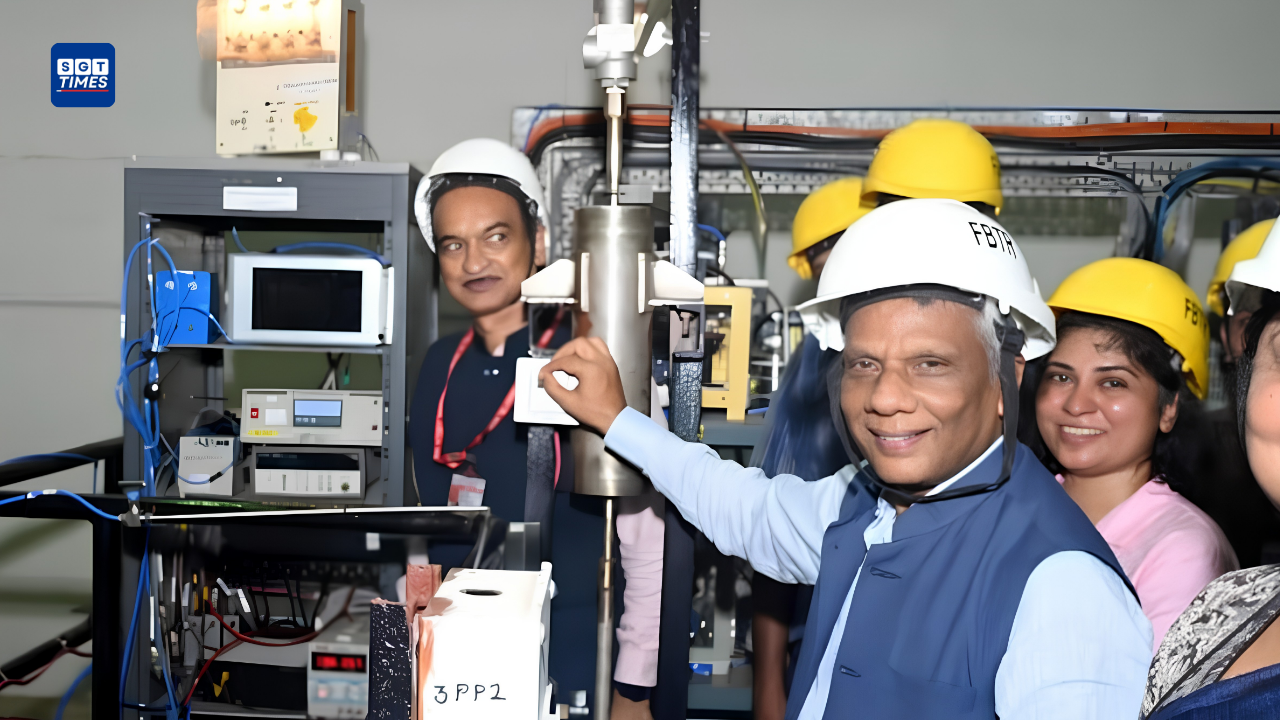
The facility was inaugurated by Dr. Ajit Kumar Mohanty, Secretary of the Department of Atomic Energy and Chairman of the Atomic Energy Commission, alongside IGCAR Director Dr. Sreekumar G. Pillai. At the event, Dr. Mohanty described the project as a technological breakthrough, emphasizing that nuclear energy uniquely provides both carbon-free electricity and high-temperature process heat, making it an ideal solution for large-scale hydrogen production.
Hydrogen is widely considered one of the clean fuels of the future because it can be utilized across various industries, transportation, and power generation without releasing carbon emissions. The newly commissioned plant is expected to generate valuable operational data that will assist scientists in optimizing the technology and preparing it for commercial-scale deployment in the coming years.
The project is the culmination of years of research, engineering, testing, and collaboration between BARC and IGCAR. Officials believe it also demonstrates how India’s advanced nuclear reactors can contribute beyond electricity generation by supporting the country’s clean hydrogen mission.
As countries around the world seek sustainable energy solutions, India’s achievement is viewed as a milestone in global clean energy innovation. The successful integration of nuclear technology with hydrogen production not only enhances India’s energy security but also reinforces its commitment to reducing carbon emissions and achieving long-term climate goals. As research progresses, this technology could pave the way for the large-scale production of affordable, carbon-free hydrogen for industries and future generations.