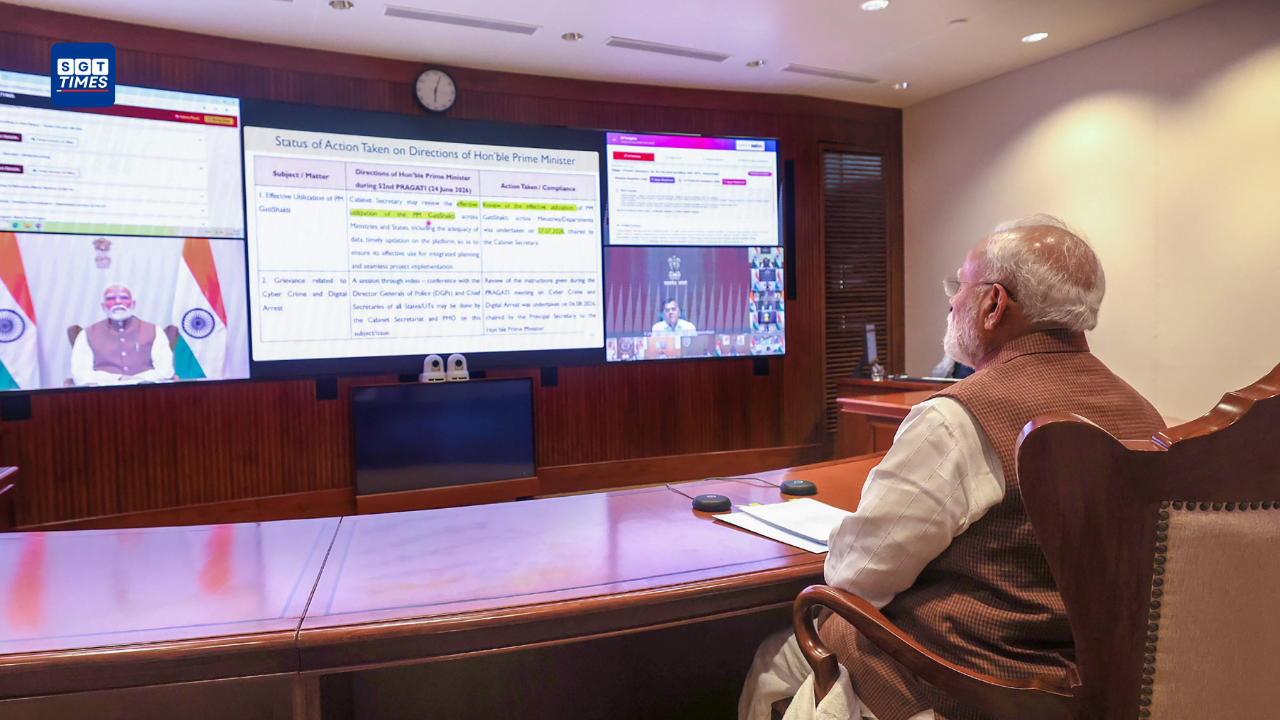
PM Modi Reviews Six Infrastructure Projects at 53rd PRAGATI Meeting
Prime Minister Narendra Modi chaired the 53rd meeting of PRAGATI, the government’s technology-enabled platform designed for proactive governance and timely project implementation, at Seva Teerth. The meeting focused on six major infrastructure projects in the railway, road, and power sectors across nine states.
These projects have a combined cost exceeding ₹30,000 crore and are deemed crucial for enhancing connectivity, promoting economic activity, and strengthening public services. During the meeting, the Prime Minister reviewed the progress of these projects and addressed potential issues that could affect their timely completion.
A key focus of the review was the coordination between various agencies. Large infrastructure projects typically involve multiple departments and authorities, making effective coordination essential to keep work on schedule. The PRAGATI platform offers a mechanism to address such challenges and identify ways to advance projects.
The meeting also addressed outstanding issues and the necessity for faster decision-making. By reviewing projects at the highest level, the government aims to minimize delays and ensure that infrastructure initiatives deliver their intended benefits to citizens and businesses.
The six projects span nine states and cover three critical sectors: railways, roads, and power. These sectors play a vital role in improving transportation, supporting industries, and providing essential services. Enhanced road and rail connectivity can facilitate travel and transportation, while robust power infrastructure is essential for homes, businesses, and industrial operations.
PRAGATI, which leverages digital technology to monitor government projects and programs, has become a platform for examining implementation challenges and fostering collaboration among various authorities. The 53rd meeting continued this approach by reviewing project timelines, outstanding challenges, and coordination needs.
The government’s overarching objective extends beyond merely approving infrastructure projects; it aims to ensure their efficient completion. Delays can lead to increased costs and defer the benefits expected by citizens and businesses.
Thus, the latest review emphasized practical implementation. With projects valued at over ₹30,000 crore under discussion, timely completion and effective coordination are central to translating these investments into enhanced connectivity, economic activity, and improved public services across the involved states.