
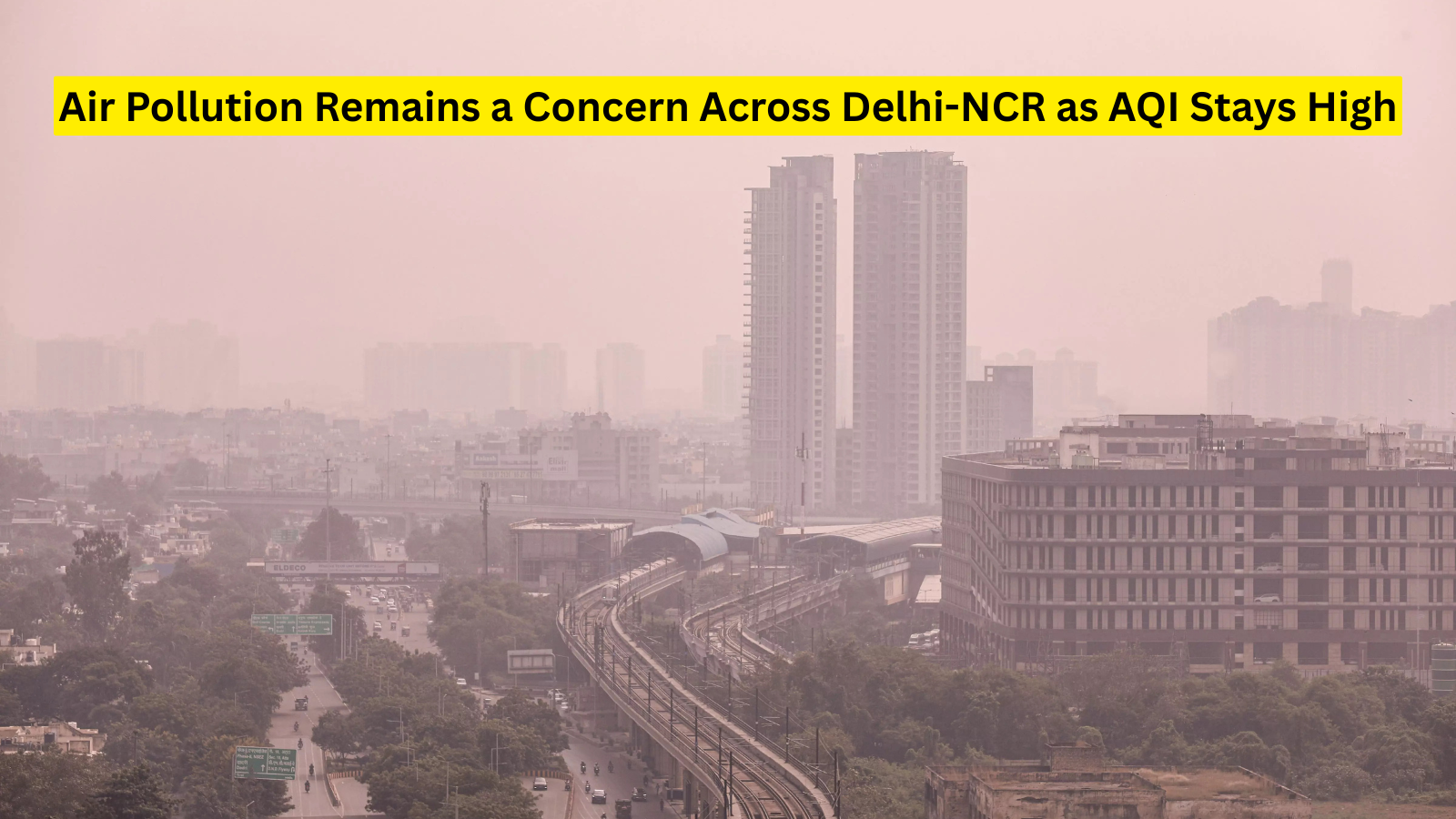
Air Pollution Remains a Concern Across Delhi-NCR as AQI Stays High
Air pollution continues to affect several parts of Delhi-NCR, with poor air quality raising concerns among residents as winter conditions begin to settle across the region. Hazy skies, reduced visibility and increasing levels of airborne pollutants have made air quality an important public health concern.
According to CPCB-based monitoring data reported on November 10, Delhi recorded an Air Quality Index (AQI) of 293 at 11 AM, placing it in the ‘Poor’ category. Gurugram recorded an AQI of 321 at 7 AM, falling under the ‘Very Poor’ category. Noida recorded 313, while Faridabad stood at 310. These readings indicate that pollution levels remain high across several NCR locations.
The Air Quality Index is used to measure and communicate the level of air pollution. India’s AQI scale ranges from 0 to 500. A reading between 201 and 300 is classified as ‘Poor’, while 301 to 400 falls under ‘Very Poor’. Higher AQI levels indicate greater health risks, particularly for children, older adults and people with existing respiratory or heart conditions.
Several factors contribute to air pollution, including vehicle emissions, industrial activities, construction dust, road dust, waste burning and agricultural residue burning. During winter, low wind speeds and temperature inversion can also trap pollutants close to the ground, making it difficult for polluted air to disperse.
Health experts advise residents to check local AQI updates, avoid unnecessary outdoor activities during periods of high pollution and take appropriate precautions. People experiencing breathing difficulties should seek medical advice.
Reducing vehicle use, avoiding waste burning, maintaining green spaces and adopting cleaner practices can also contribute to improving air quality.
As pollution remains a seasonal challenge, awareness and collective responsibility are important steps towards creating a healthier environment.


