Why E20 Fuel Isn’t Cheaper Than Petrol: Centre Explains the Bigger Picture
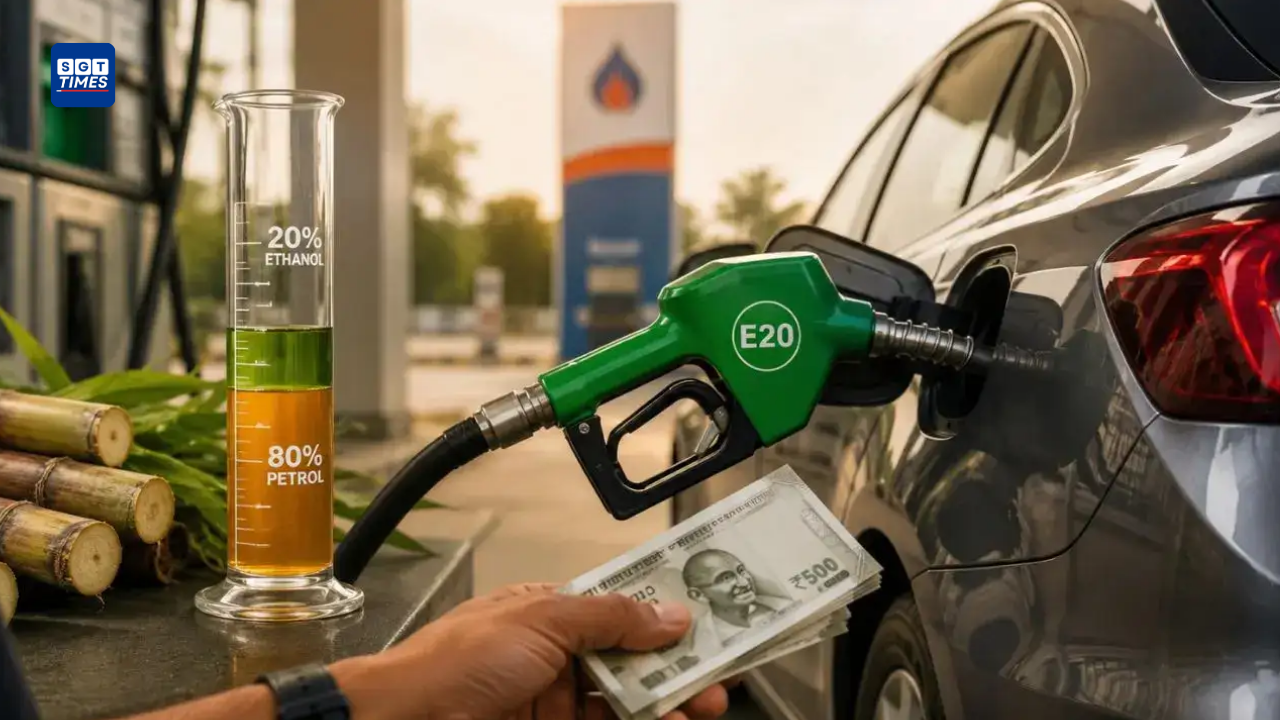
If you’ve been wondering why E20 fuel isn’t cheaper than regular petrol, despite containing 20% ethanol, the Centre has provided a clear answer. According to the Ministry of Petroleum and Natural Gas, the goal of E20 is not to offer immediate savings at fuel stations, but to enhance India’s energy security, support farmers, and reduce dependence on imported crude oil.
This clarification comes as E20 fuel is being made available across the country. Many consumers had expected the blend to cost less since ethanol is produced domestically. However, the government explained that ethanol is purchased from farmers at fixed and protected prices, whereas crude oil prices fluctuate in the international market. For instance, maize-based ethanol is currently procured at approximately ₹71.86 per litre, making E20 more costly to produce when global crude prices remain around $70 per barrel.
Officials noted that a noticeable price advantage for E20 would only be achievable if global crude prices significantly increase to around $120–130 per barrel. Until that happens, the primary benefit of E20 lies in its ability to replace one-fifth of every litre of petrol with domestically produced ethanol, helping India reduce its reliance on imported fuel and making the economy less vulnerable to global oil price fluctuations.
The ministry also addressed concerns regarding older vehicles. It stated that data from Maruti Suzuki, based on servicing 2.84 crore vehicles during 2025–26, found no reported instances of engine corrosion or fuel system failure, even among older models that were not originally certified for E20. Industry bodies, including ARAI, SIAM, and Indian Oil Corporation, have confirmed that there are no major compatibility concerns.
While the government acknowledged that E20 may reduce fuel efficiency by about 3 to 5%, it emphasized that the fuel offers a higher octane rating, improved engine performance, and a potential reduction in lifecycle carbon emissions by nearly 40%.
India’s journey towards ethanol blending began with a pilot project in 2001 and gained momentum following policy reforms in 2018, which broadened ethanol production beyond sugarcane to include maize and damaged food grains. According to official data, the programme has helped save over ₹1.97 lakh crore in foreign exchange by decreasing crude oil imports, while transferring more than ₹1.66 lakh crore to farmers and the rural economy.
The Centre states that the transition to E20 is a long-term investment aimed at creating a cleaner, more self-reliant, and energy-secure India, even if motorists do not see immediate reductions in fuel prices.