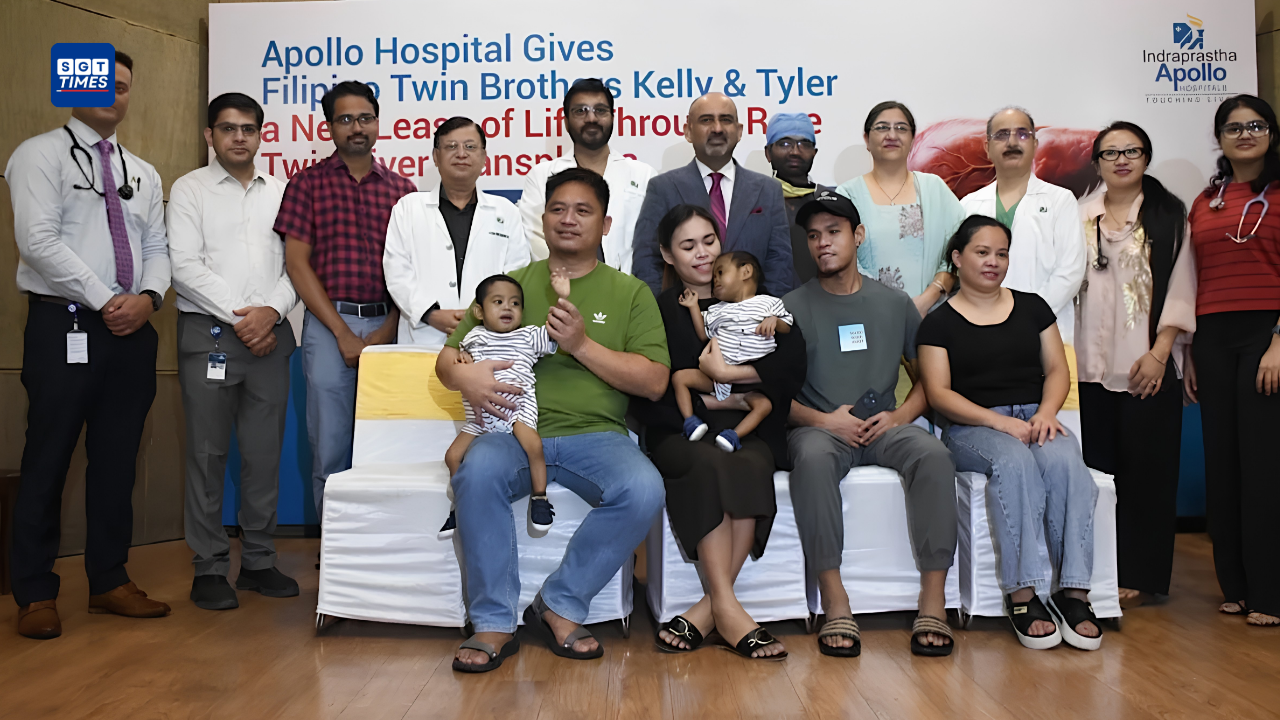
Delhi hospital gives Filipino twin brothers a new lease of life with rare liver transplants
Two young brothers from the Philippines have been given a fresh start in life after doctors at Indraprastha Apollo Hospital in Delhi successfully performed rare back-to-back liver transplants. The 23-month-old twins, Kelly and Tyler, were suffering from Choledochal Cyst Type IVA, a rare congenital condition that severely damaged their bile ducts, ultimately leading to complete liver failure.
The life-saving procedures were conducted by a multidisciplinary medical team led by Dr. Anupam Sibal, Group Medical Director and Senior Pediatric Gastroenterologist, alongside Dr. Neerav Goyal, Senior Consultant and Head of Liver Transplant Surgery. According to the hospital, this is the first pediatric twin liver transplant among the 645 pediatric liver transplants completed at Apollo Hospital thus far.
The twins were born prematurely, weighing just 2 kg and 2.4 kg. Within weeks of their birth, both developed persistent jaundice and pale-colored stools. Further medical evaluation confirmed the rare liver disorder, which gradually worsened despite treatment. Over the following months, the children faced repeated hospital admissions, poor growth, internal bleeding, and fluid accumulation in the abdomen. Doctors eventually concluded that liver transplantation was the only option to save their lives.
Finding suitable donors for two children at the same time proved to be one of the biggest challenges. Their mother donated a portion of her liver to one child, but their father was medically unfit to donate. Fortunately, their maternal uncle stepped forward and donated part of his liver to the second child, making both surgeries possible.
Tyler’s transplant lasted more than 15 hours, while Kelly’s surgery continued for over 13 hours. The complex operations involved intricate surgical reconstruction and were completed successfully. Doctors reported that the transplanted liver portions regenerated to nearly full size within a few weeks, allowing both children to recover well and regain healthy liver function.
Hospital officials stated that this case reflects the growing capabilities of India’s advanced transplant programs and highlights how timely diagnosis, expert medical care, and strong family support can transform lives. Doctors also urged parents to seek immediate medical attention if infants show persistent jaundice or pale stools, as early treatment can significantly improve long-term outcomes for children with congenital liver disorders.